Quarry lakes & ruins
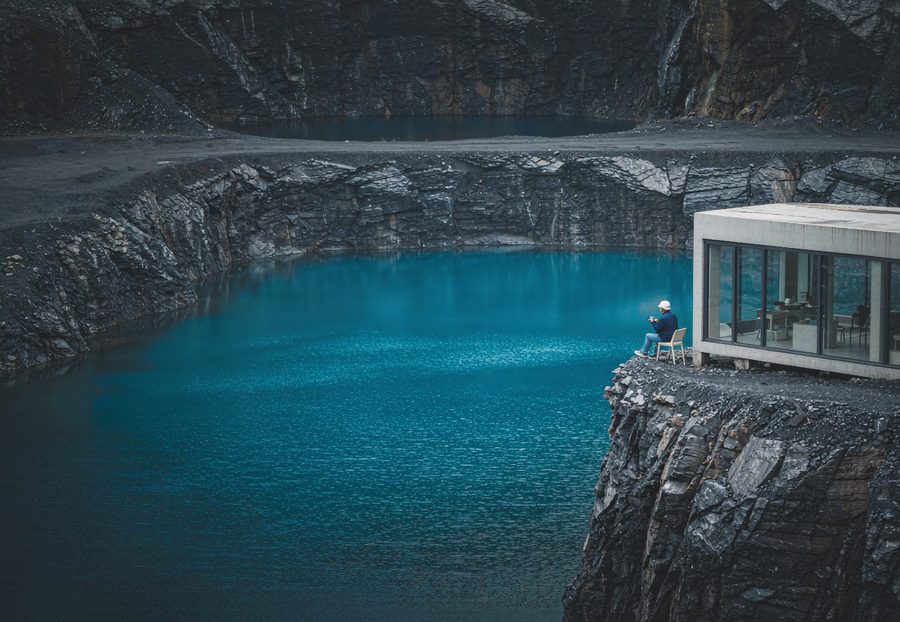
Anji's old cement and lime mines, flooded and re-greened, are now the county's most photogenic terraces. Industrial concrete against impossible blue water — the look that made Deep Blue Plan famous.
Anji has 332 village cafés in one 600,000-person county — more per person than Shanghai itself. Quarry lakes, bamboo waterfalls, tea terraces and opera stages, all with a coffee machine. 2.5 hours from the city.
Short answer: if you have one café in you, make it Deep Blue Plan (梅溪镇红庙村) — a flooded quarry of impossible blue water, ¥68 entry that includes your coffee. With more time: Pubu Waterfall Coffee (¥79, three falls in a bamboo gorge), the courtyards of Xiaoyin Half-Day Village, and One Leaf in the white-tea hills. Go weekday mornings; the whole point is the silence.
Counts are Anji's official village-café map (2025) plus county tourism figures; entry prices are what the gate charges in 2026 and include a coffee at the two scenic cafés.
No coffee is grown in Anji. What grows here is scenery — and in the last four years that scenery became the product: young founders took over mines, gorges, tea hills and empty village halls, and put a barista in each one.
Anji's old cement and lime mines, flooded and re-greened, are now the county's most photogenic terraces. Industrial concrete against impossible blue water — the look that made Deep Blue Plan famous.
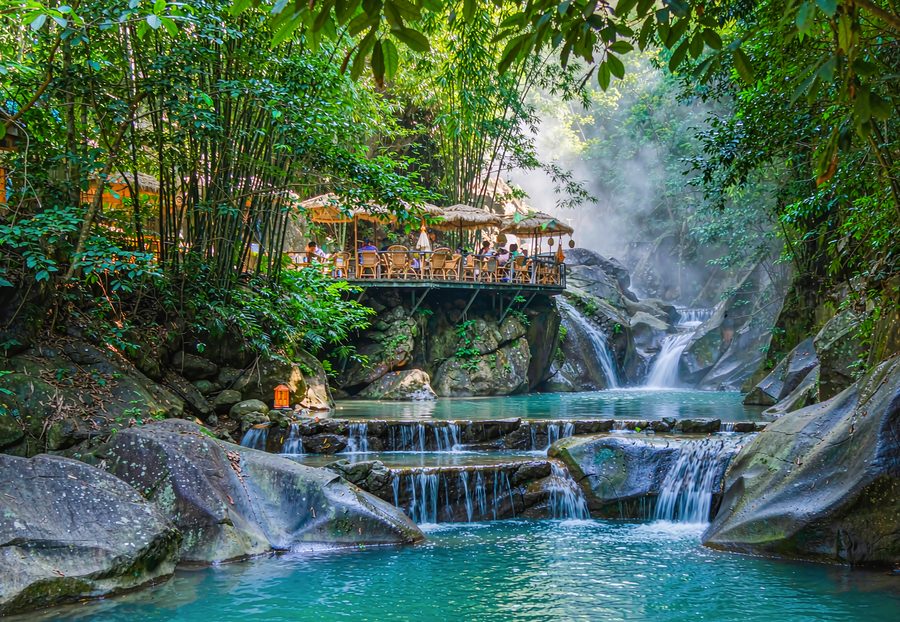
In the southern valleys, cafés are built into working gorges: three-tier falls, thatched parasols, the sound of water instead of music. Southeast-Asian resort energy, Chinese mountain prices.
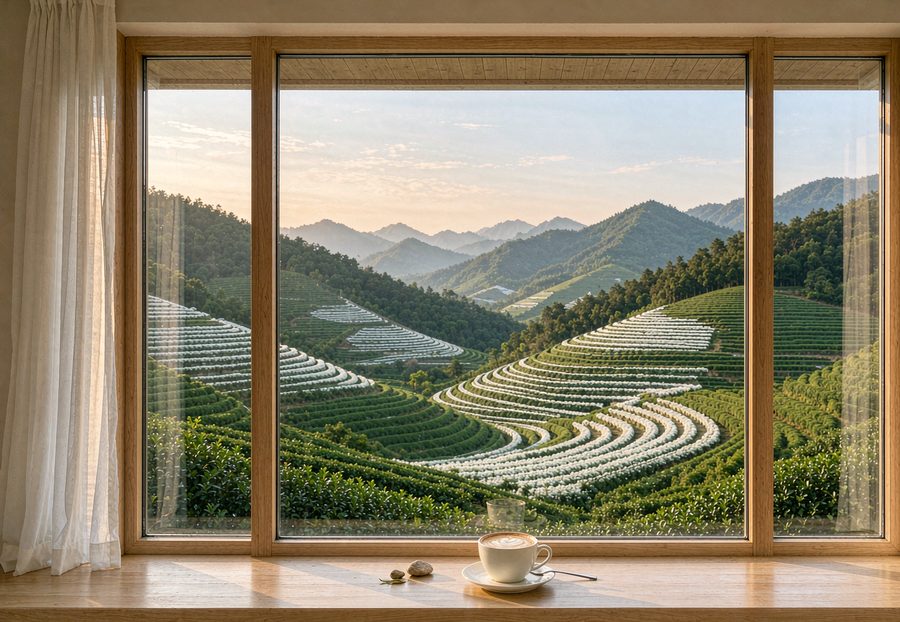
White-tea country (Xilong) puts its cafés inside the camera frame: picture windows, deck rails and infinity lawns all pointed at the same curved green terraces.
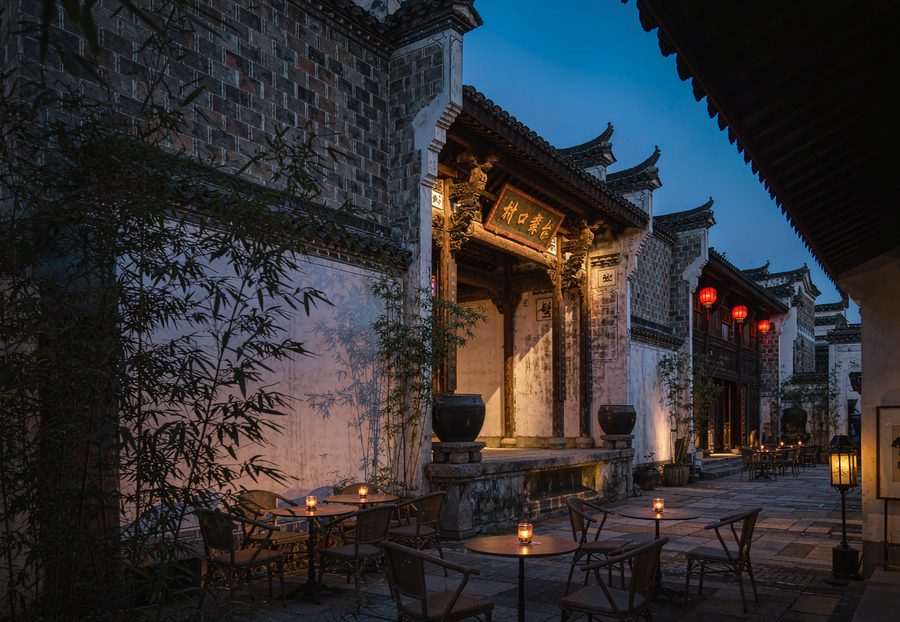
The quietest cafés live in restored hamlets and reused buildings — an opera stage, a farm-factory hall, a train carriage in a field. Less famous, more local.
Not the full 332. These are the ten we send guests to, with the honest caveat on each: what it costs, how long it takes, and when the light is right.
01
Hongmiao village, Meixi Town (north Anji)
The café that started it all. A flooded quarry beside a ruined cement plant, water the colour of glacier ice, a glass box on the cliff edge. Entry is ¥68 and includes one coffee — effectively a ticket to a photo studio. A student team opened it in 18 days in 2022; it once sold 8,818 cups in a single day, a national record.
02
Dali village, Shanchuan Township (south Anji)
Three natural waterfalls inside a bamboo gorge, dressed with thatched umbrellas, rattan chairs and an orange lantern — the self-aware 'Bali, but 2 hours from Shanghai'. You can wade, camp, or just sit close enough to the falls that conversation stops. ¥79 entry includes a coffee voucher.
03
Yucun, Tianhuangping Town
A second, wilder Pubu built into the old Lengshuidong quarry above Yucun: cliff walkways, a tunnel cut through the rock, waterfall terraces with an industrial edge. Pairs naturally with an hour in Yucun village itself — the birthplace of the 'green mountains are gold' idea, now a village of cafés and studios.
04
Huangdu village, Xilong Township (east Anji)
Tea-hill country. The cafés here compete on the viewfinder: huge windows, deck rails and lawns all aimed at the same curved terraces of white tea. 'One Leaf' is the famous one — pet-friendly, with tea drinks as well as coffee, and free tastings when the spring harvest is in.
 05
Hengshanwu, Lingfeng subdistrict (near county town)
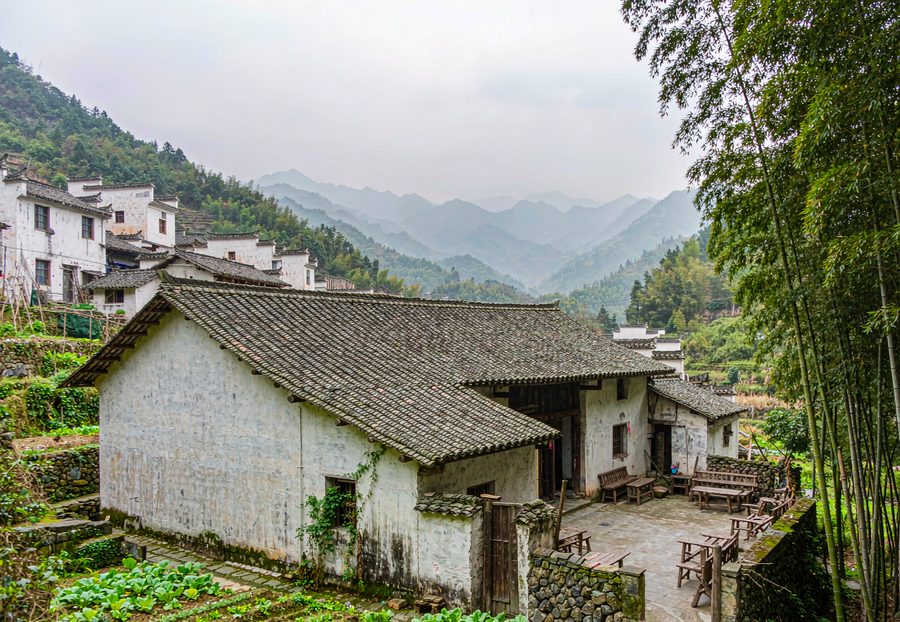
A restored hamlet turned into a cluster of homestays and more than a dozen design cafés — white walls, courtyards, a glass-house café under a persimmon tree. The easy option: everything is within 200 m, and the quality floor is high. Half a day disappears fast, hence the name.
06
Mantangli village, Dipu subdistrict
A café inside a restored village opera stage — grey brick, red lanterns, candle-lit tables. The village is better known as a night light-art installation; come for coffee at blue hour, stay for the lantern walk after dark.
 07
Baofu Town, 680 m up (west Anji)
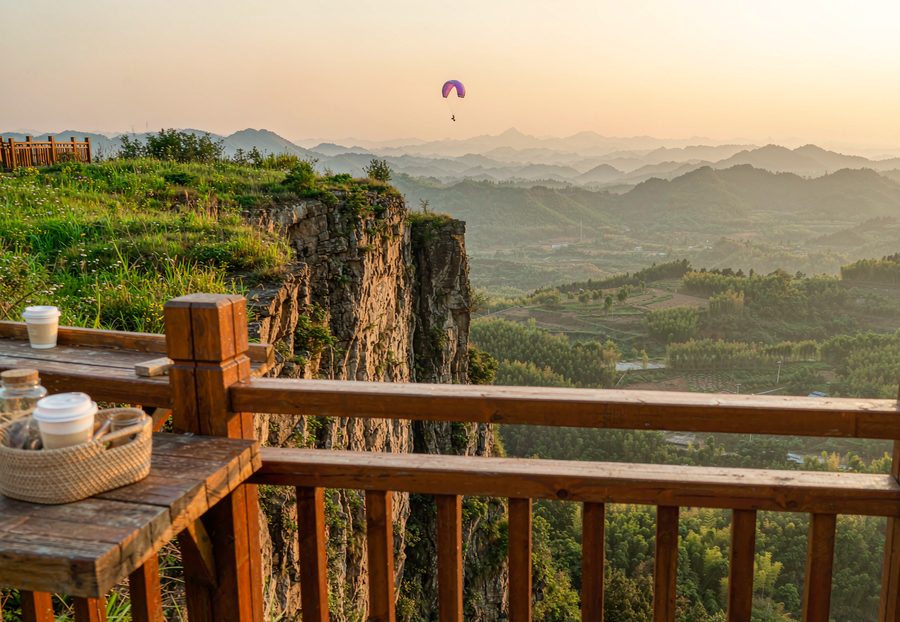
A paragliding launch field with a café bolted to the view: 680 metres above the valley, the whole bamboo sea below,伞翼 (paraglider wings) drifting past your table at sunset. Tandem flights can be booked; the coffee is optional, the cliff is not.
 08
Yucun, Tianhuangping Town
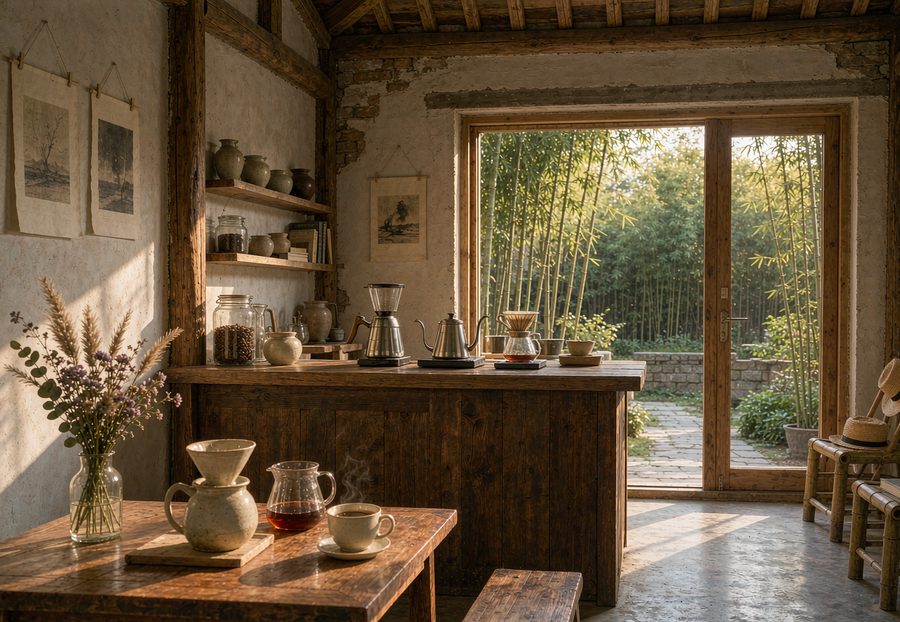
Yucun is a working village that became a national symbol, and its cafés grew with it — a courtyard café run by a local ('Xiaohu's'), an anime-themed space, bike hire, a bookshop. Nothing here is world-class coffee; everything here is a pleasant hour between walks.
 09
Lujiacun, Dipu subdistrict
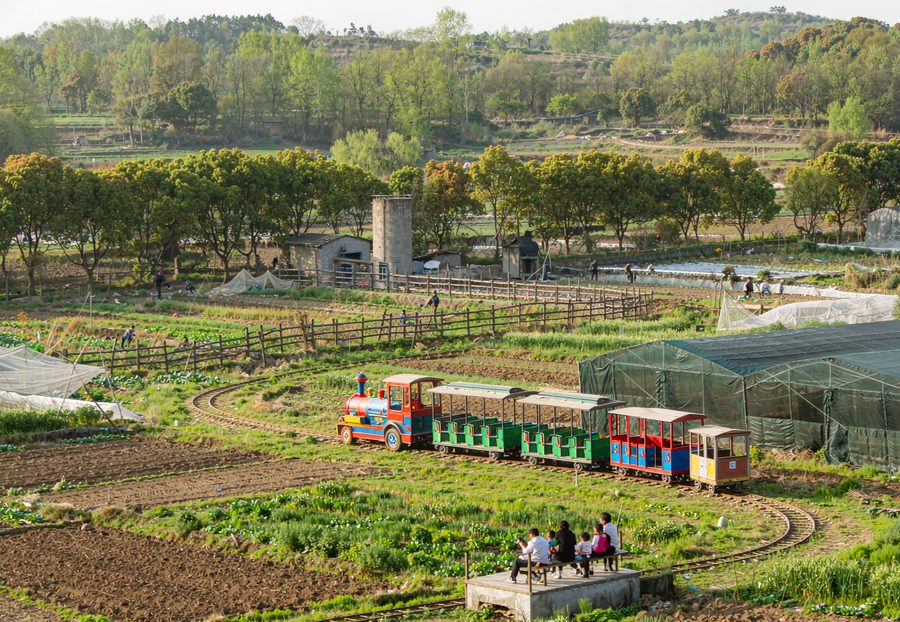
A café in a vintage carriage on the little farm railway that loops Lujiacun's fields — the 'family photo with wheels' of Anji. With children this is the easiest win: a 4 km mini-train ride, animals, and coffee within sight of the platform.
 10
Jingwan village, north Anji
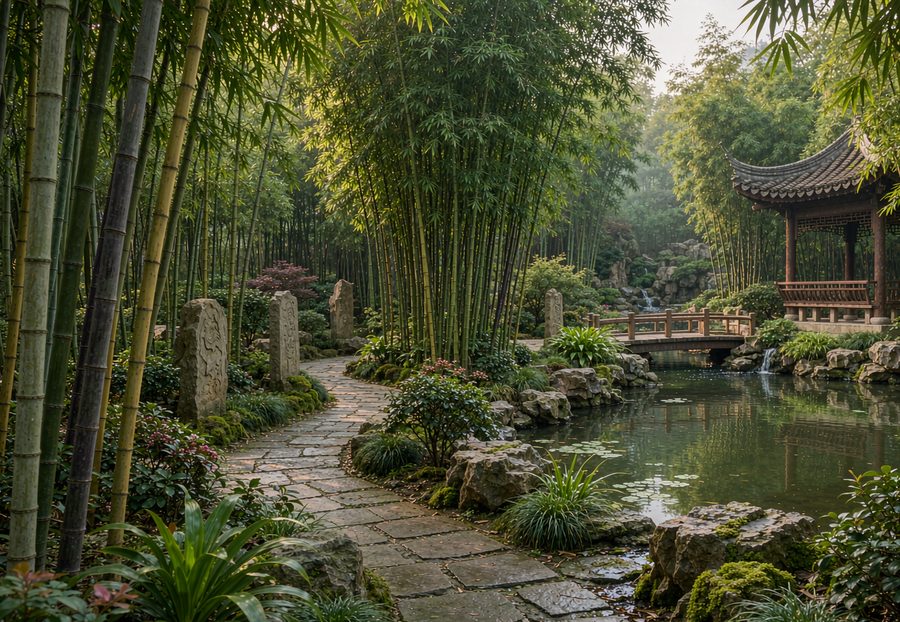
An old factory hall rebuilt into a café with almost too many ideas attached — a small museum, a pet lawn, vegetable plots, a field walk. On a good weekend it feels like a village fair; on a weekday it feels like borrowing someone's garden.
Names and prices verified November 2026. Village cafés open, close and rebrand quickly in Anji — we re-check every listing before we put it in your itinerary.
The same café is three different places at 08:00, 15:00 and 18:30. This table is the whole trick.
| Hours | What it feels like | What to do |
|---|---|---|
| 07:00–09:30 | Mist and empty decks | Tea terraces and quarry lakes before the crowds. Photographers' window; some outlying cafés open later, so pair this with your homestay's coffee. |
| 11:00–15:00 | Peak crowds on weekends | Avoid the famous ones on Saturday/Sunday midday — Deep Blue Plan can hold a queue. Weekdays this window is fine. |
| 15:00–17:30 | The soft window | Best all-round light for courtyards, glass houses and tea rows. Our default café hour. |
| 17:30–19:00 | Sunset & blue hour | Clifftop cafés (Yunkai JUMP), lantern villages (Mantangli), lake decks. Summer cafés stay open later; winter closes at 18:00. |
Anji's cafés are 30–60 minutes apart across different valleys. Two loops, both tested, both with a reason to be in the car.
Three very different cafés in one loop: quarry, hamlet, lantern stage. Doable as a long day trip from Shanghai, better as an overnight.
The route for people who want their coffee with adrenaline. In summer add stream shoes; in winter swap the waterfall deck for the cliff tunnel.
¥28–58 for a latte or pour-over; ¥38–68 for cake. The two scenic cafés charge entry that includes a drink: ¥68 at Deep Blue Plan, ¥79 at Pubu. Two people, a full café day, under ¥300.
WeChat Pay and Alipay cover almost everything; foreign Visa/Mastercard works at maybe half the bigger cafés. We set up your payment apps before you land and keep cash in the car.
Village cafés typically 09:00–18:00, later in summer; some close entirely on Mondays. The scenic ones run 08:30–17:30 with last entry an hour before closing. We call ahead so you never photograph a locked door.
Cafés are for coffee and cake — proper halal and vegetarian meals are arranged at homestays with a day's notice. High chairs are rare; prams are fine at the village clusters, hard at the waterfall decks.
No sets, no script — Anji villages still run on bamboo shoots, firewood stoves and tea fields. This is what a Li Ziqi-style day looks like here, and yes, we can book it.
| Time | What you do | Where |
|---|---|---|
| 07:30 | Morning mist walk through the bamboo sea before the tour buses | Port villages near Tianhuangping |
| 08:30 | Farm breakfast: bamboo-shoot rice cooked in a firewood stove | Host family courtyard |
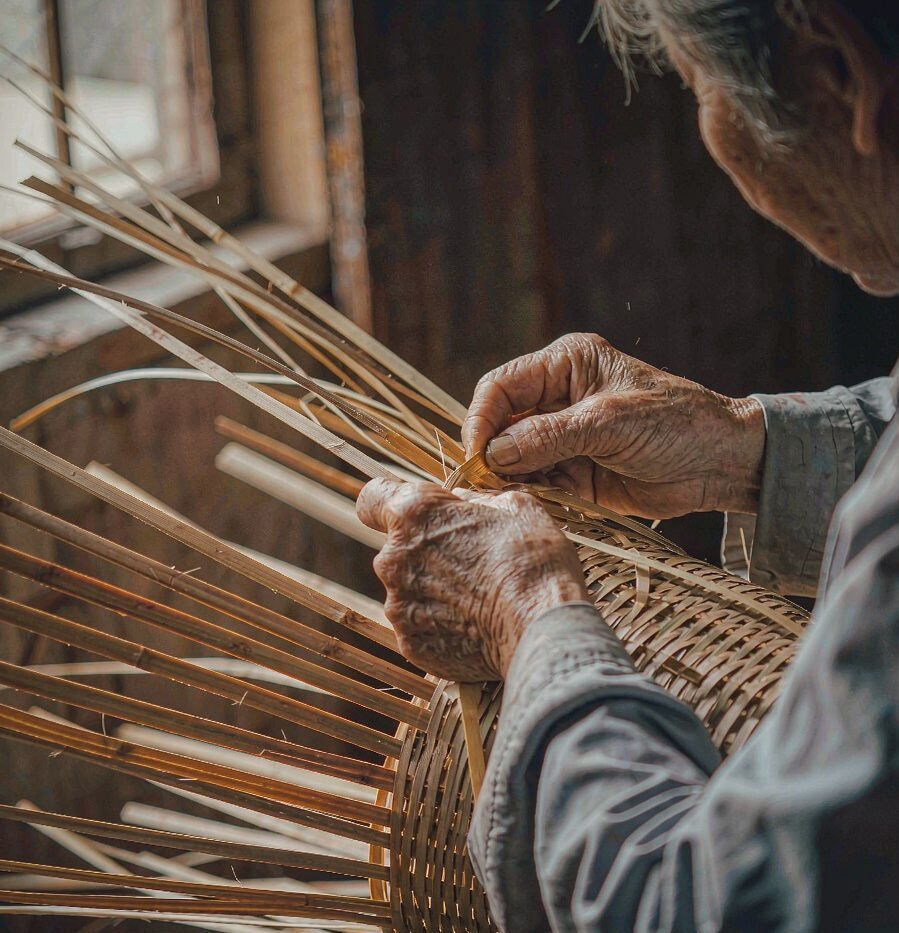
| 10:00 | Bamboo weaving lesson with a village craftsman — take your piece home | Craft workshop |
| 12:00 | Firewood lunch, everything from the garden that morning | Homestay kitchen |
| 14:30 | White tea terraces: pick a basket in season, roast a pinch, drink the rest | Xilong tea valley |
| 17:00 | Sunset over the rice paddies, dinner with the family, early night | Village homestay |
A county of 600,000 people has 332 village cafés — more per capita than Shanghai. The short version: young founders (Anji has recruited tens of thousands of returning graduates) took abandoned mines, gorges, tea hills and village halls, and turned the scenery itself into the product. Coffee is the ticket; the view is the business.
Two properly, three if you keep each stop short. Distances between valleys are 30–60 minutes by car. Our crawls are built around two cafés plus one sunset stop.
First visit: Deep Blue Plan — the quarry lake is the most Anji thing there is. Photographers: One Leaf in Xilong for tea terraces, or Yunkai JUMP for the paragliding valley. With children: Lujiacun's train café or the Pubu stream.
Walk-in works on weekdays almost everywhere. On weekends, Deep Blue Plan and Pubu manage queues at the gate; clifftop sunset tables and paragliding slots are better pre-booked — we handle this when we build your plan.
Coffee is ¥28–58. The two big scenic cafés charge entry that includes a coffee: ¥68 (Deep Blue Plan) and ¥79 (Pubu Bali). Cake ¥38–68. Parking is usually free or ¥10. Two people can have a full café day for under ¥300.
Honest answer: some of it is genuinely good — the top cafés hire trained baristas and roast properly — and some of it is scenery-first. We tell you which is which when we plan your day, and nobody comes to Anji for the flat white anyway.
Tell us your dates and we will build the day around two cafés, one sunset and a very long lunch — with a driver who knows which gate has the shorter queue.